01 · Land
Find a suitable site
Confirm land control, zoning, fire access, utilities and enough space for homes and shared facilities. A car park's stall count cannot be treated as RV housing capacity.
The homes plan
Scott Gilbert proposes serviced sites for safe, stationary RVs and suitable modular or converted container homes as one affordable housing option. Residents would have privacy, a say in the design and a path to permanent housing.
Illustrative concept
An RV that no longer drives could still provide a private space if its structure, heat, ventilation and electrical systems are safe. A converted shipping container or other modular unit is another possible form, subject to building and fire requirements.
The site needs reliable toilets, showers, laundry, drinking water, waste service, safety and accessible options. Residents should be able to choose whether this arrangement suits them.
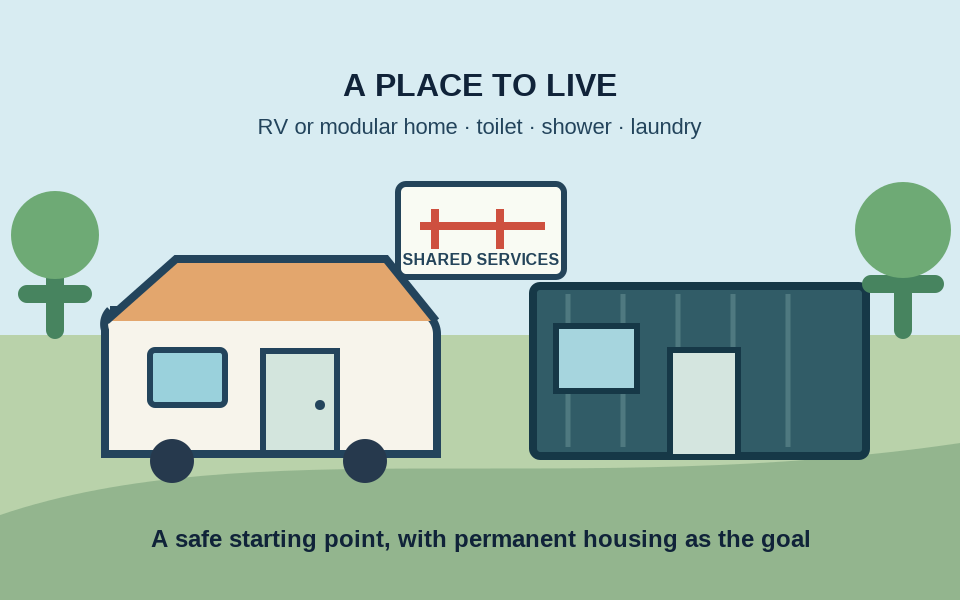
Concept illustration, not an approved site plan or code-compliant building design.
From concept to a real site
01 · Land
Confirm land control, zoning, fire access, utilities and enough space for homes and shared facilities. A car park's stall count cannot be treated as RV housing capacity.
02 · Homes
Check roofs, heating, electrics, sanitation and accessibility. Stationary RVs and modular homes must be safe, dry and suited to the resident who chooses them.
03 · Budget
Get real quotes for site preparation, staff, insurance and maintenance. Confirm with the Province whether each resident's housing costs qualify for shelter assistance; that support is not automatic.
A longer path
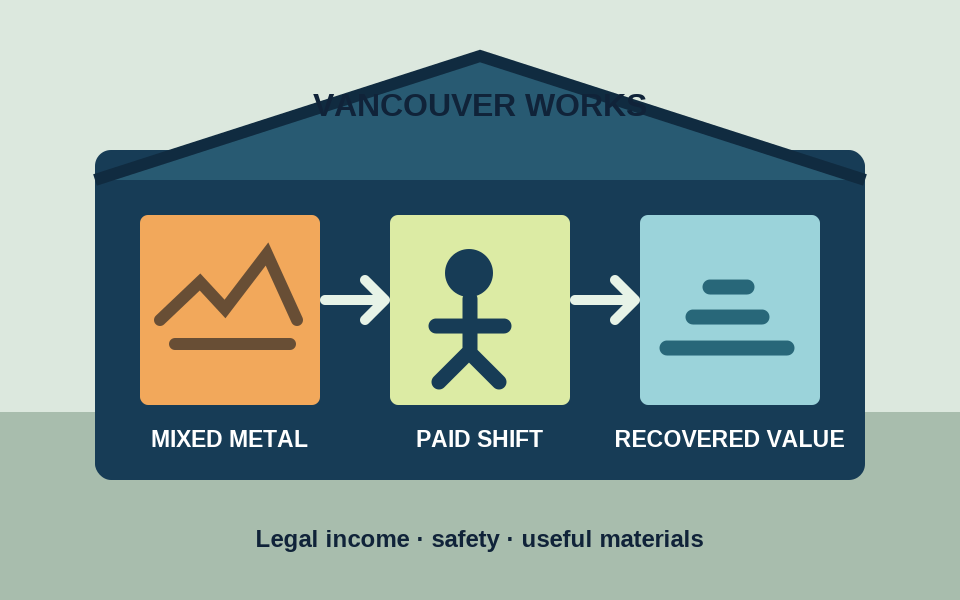
A secure place for a person, their belongings and perhaps a pet can make healthcare and employment easier to reach. Vancouver Works proposes supported paid shifts for people who want that route.
Public toilets are still needed for everyone who is outside today. More permanent, deeply affordable homes remain the long-term goal.
Read the work plan